
How to Make Subject Lines Count Using Intent Data
Most inboxes only show a few words before the open. Learn how to use buyer intent, device context, and timing to make subject lines earn attention.
Peter Galilee
SimplyLinked Growth & Acquisition Team
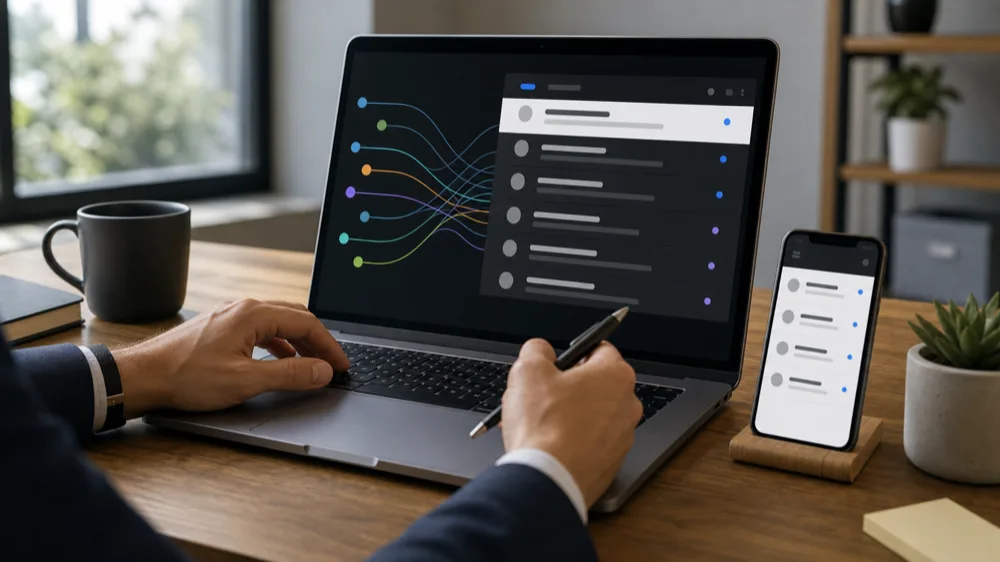
Your subject line does not get a paragraph.
On mobile, it often gets a few words. Depending on the email client and screen size, the visible subject line may be roughly 30 to 50 characters before it gets cut. Twilio’s guidance puts the mobile range around the mid-30s to low-40s, while ActiveCampaign notes that many mobile clients show about 30 to 40 characters. Twilio’s subject-line length guidance and ActiveCampaign’s subject-line length glossary both land on the same practical point: the front of the subject line matters most.
That does not mean every subject line should be tiny.
It means the first visible words have to carry the intent.
The Inbox Is A Cropping Tool
Marketers often write subject lines like the whole sentence will be read. That is a dangerous assumption.
Salesforce recommends keeping subject lines concise, clear, and front-loaded so the most important words appear early. Salesforce’s subject-line guide is useful because it treats subject lines as a relevance problem, not a creativity contest.
That is the right frame.
The inbox crops your message. Mobile crops harder. Notification previews crop differently. Desktop gives you more room, but not unlimited patience.
So the subject line has one job: help the right buyer recognize why this email belongs in their day.
Intent data makes that job easier.
Intent Should Decide The First Words
Most bad subject lines are written from the seller’s perspective:
- Quick question
- Following up
- Checking in
- Growth idea
- Wanted to connect
Those are not subject lines. They are placeholders.
Intent data gives you a better starting point because it tells you what the buyer is already circling. Did they look at pricing? Compare a service? Return to a local market page? Read about a specific pain? Engage with content tied to a category?
The subject line should spend its limited visible space on that context.
If the buyer showed intent around insurance leads, do not start with “Quick question.” Start closer to the demand:
- Texas insurance shoppers
- Missed insurance traffic
- Local insurance intent
- Pricing page follow-up
- Homebuyer demand near you
None of those are poetry. That is the point.
The subject line is a street sign, not a billboard. It should tell the buyer they are on the right road before they drive past.
Mobile Buyers Need Faster Recognition
Mobile inboxes reward instant recognition.
A founder checking email between meetings is not parsing nuance. A local business owner glancing at their phone after a customer call is not evaluating your full positioning. A broker, contractor, or insurance operator may only see the first few words while moving through a workday.
For these buyers, lead with the category, location, or problem:
- Austin buyer intent
- Roofing demand nearby
- Mortgage shoppers this week
- Missed quote requests
- Local pricing traffic
The goal is not to cram personalization into the subject line. The goal is to make the email feel obviously relevant before the preview cuts off.
Mobile also changes tone. Long, polished subject lines can feel slow on a phone. Short, concrete lines tend to read cleaner because they look like a useful update rather than a campaign.
Desktop Buyers Give You More Room, Not More Patience
Some buyers are more likely to review outreach on desktop.
Executives, operations leaders, finance teams, marketing managers, and technical buyers often process email in batches from a laptop. BuzzStream’s analysis points out that visible subject-line length varies heavily by client and context, with desktop views often giving more room than mobile. BuzzStream’s subject-line length breakdown is a good reminder that there is no single magic character count.
Desktop gives you enough room to add a little more specificity:
- Texas insurance shoppers found this week
- Pricing traffic from local homebuyers
- Intent signals around your category
- Missed demand on your service pages
- Competitors may see this traffic first
But extra room is not permission to ramble.
Desktop buyers still scan. They triage. They delete. They compare your email against internal threads, customer issues, calendar pressure, and everything else competing for attention.
The first words still need to do the heavy lifting.
Time Of Day Changes The Job
Morning email is different from afternoon email.
Early in the day, many buyers are sorting priorities. Subject lines should be clear enough to survive triage:
- New pricing-page intent
- Local buyers to review
- Insurance demand signal
Midday, people are between tasks. Specificity helps because the buyer needs a reason to stop:
- 14 returning visitors from Dallas
- Mortgage intent near your market
- Follow-up on service-page traffic
Late afternoon, attention is lower and context matters more. A subject line that feels like a practical next step can outperform something clever:
- Worth reviewing tomorrow
- Intent signals from this week
- Buyer activity to prioritize
This is not a universal send-time law. It is an operating principle: match the subject line to the buyer’s likely mental state when they see it.
Match The Subject Line To Signal Strength
Not all intent deserves the same subject line.
Weak signal needs softer framing.
If someone read a general blog post, do not write like they requested a quote. A better subject line might be:
- Saw interest in outbound
- Useful note on visitor intent
- Thought this matched your market
Medium signal can be more specific.
If the account returned to a service page or engaged with category content:
- Local intent around insurance
- Returning traffic from your market
- Demand signal worth reviewing
Strong signal earns directness.
If the account visited pricing, comparison, demo, or high-intent pages:
- Pricing-page follow-up
- Buyers comparing options
- Intent from your service pages
The more direct the subject line, the more accurate the signal needs to be. Otherwise, the email feels overconfident.
The Best Subject Lines Are Operational
Subject lines are often treated like copywriting garnish. They should be treated like routing logic.
Who is the buyer?
Where are they likely reading?
What did they signal?
How strong is the signal?
What would make this email worth opening in three seconds?
Those questions produce better subject lines than brainstorming clever hooks in a vacuum.
They also keep outbound honest. Intent data should not be used to sound like surveillance. It should be used to make timing and relevance sharper.
At SimplyLinked, this is how we think about intent-led outreach. The signal does not write the email for you. It tells you what the first words should earn.
If the buyer only sees 35 characters, those 35 characters should not be wasted on “Quick question.”
They should make the buyer think, “That is actually about me.”
Ready to design your custom campaign?
Tell us who you need to reach. We’ll research your audience, pull a sample snapshot of intent records, and build the custom campaign angle for you.