
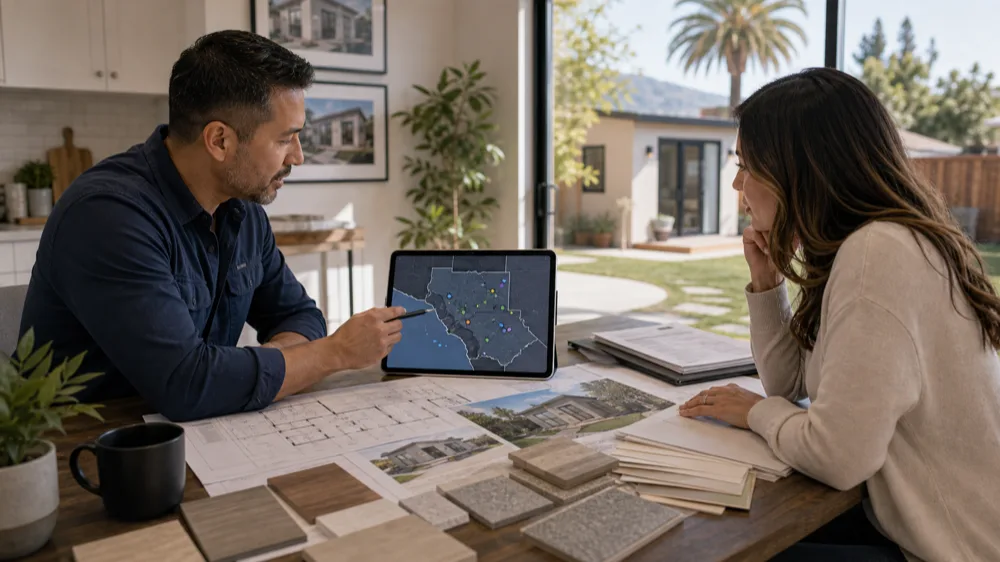
ADU and home addition demand starts before the quote request
For ADU builders, home addition contractors, and remodeling companies, the best opportunity is often earlier than the estimate form.
Homeowners may be researching whether an ADU is feasible, how a room addition could solve a family need, what permits may be required, whether remodeling beats moving, or whether a property improvement could create long-term value. Those searches happen before the homeowner is ready to ask three contractors for bids.
That is the window this snapshot is built around.
The challenge: most home improvement marketing starts too late
For ADU builders, home addition contractors, and renovation companies, timing matters as much as targeting.
Many contractors rely on paid ads, referrals, SEO, and third-party platforms. Those channels can work, but they often reach homeowners after the buyer has already narrowed their options.
By that point, the homeowner may already be:
- Comparing multiple contractors
- Reviewing permit requirements
- Pricing out additions or remodels
- Looking into financing or return on investment
- Preparing to request estimates
The opportunity is not simply to advertise more. It is to identify homeowners while intent is forming.
California’s Department of Housing and Community Development maintains official ADU guidance, which reinforces why this category has a planning-heavy buyer journey. Homeowners often need to understand feasibility, local requirements, design options, and use case before they are ready to talk to a builder.
What the Southern California snapshot found
SimplyLinked identified 19,800 matching contacts across Los Angeles, San Bernardino, and Riverside Counties for a Southern California company offering services such as ADUs, home additions, backyard structures, remodeling, and property improvement projects.
The audience was filtered using specific criteria:
- Geographic targeting in relevant service counties
- A 14-day lookback window
- B2C homeowner intent
- High and medium intent score categories
- Required contact details with valid email addresses only
This was not a random homeowner list. It was a recent, geographically filtered audience showing research behavior tied to home expansion, renovation, permits, and property value.
It is also not a list of confirmed projects, signed contracts, or guaranteed buyers. It is a prioritization layer for finding relevant homeowners earlier.
Four campaign segments surfaced
The snapshot grouped the audience into four practical campaign categories:
| Segment | Signals included | Useful campaign framing |
|---|---|---|
| Backyard and Detached Structures | Deck and patio building, landscape design and installation, home renovation, room additions, and general home improvements | Help homeowners think through usable space, outdoor living, and project planning |
| ADU Planning and Permit Research | Zoning and building codes, interior design, building lots, acreage, and land prep for mobile home use | Lead with feasibility, permitting, timelines, and next-step planning |
| ADU and Home Addition Buyers | Home renovation, living room remodeling, kitchen remodeling, bathroom remodeling, and general remodeling | Frame the offer around expanding or improving the current home instead of moving |
| Property Value and Investment | Property appreciation potential, future property plans, tax-advantaged passive income, net investment income tax planning, and renting out the property | Connect the project to value, flexibility, rental potential, and long-term property strategy |
 The approved count is shown in the metric cards and copy; this image illustrates how different intent clusters support different campaign decisions.
High intent and medium intent need different messages
The snapshot included high and medium intent score categories. Both can be useful, but they should not receive the same message.
High-intent homeowners may be closer to a decision. Their behavior may suggest repeat engagement, deeper service exploration, or stronger project consideration. For an ADU builder or home addition contractor, this group is better suited for estimate offers, consultation calls, feasibility reviews, or project-specific campaigns.
Medium-intent homeowners may still be evaluating. They may be comparing options, learning about permits, reviewing design ideas, or trying to understand whether an ADU or addition is realistic. This group is better suited for education, planning guides, project timelines, zoning explainers, and nurture campaigns.
The signal helps decide the next conversation. It does not replace the conversation.
Why geography matters in this category
The audience was narrowed to Los Angeles, San Bernardino, and Riverside Counties.
For ADU and home addition companies, that geographic filter is not cosmetic. It controls whether the audience is serviceable, whether the project type makes sense, and whether follow-up can be tied to local conditions, permitting realities, and travel radius.
Instead of wasting budget on a broad homeowner audience, the company can prioritize the regions where demand and delivery overlap.
What a contractor can do with this audience
An ADU, home addition, or remodeling company could turn the audience into several practical acquisition motions.
Launch targeted email campaigns
The company can match the message to actual research behavior:
- Permit-research contacts receive education around feasibility, approvals, and build timelines.
- Home addition audiences receive messaging around expanding living space without moving.
- Property-value audiences receive content around flexibility, rental potential, and long-term value.
- Backyard-structure audiences receive project-planning content around usable outdoor space.
Build retargeting audiences
These contacts can support multichannel campaigns so the company stays visible while homeowners continue comparing options.
That matters in longer decision cycles like ADUs, room additions, and major remodeling projects.
Reach homeowners before competitors
Most contractors wait for the form fill. Intent data gives the company a way to identify likely project interest earlier in the research cycle.
That creates a chance to educate and shape the conversation before the homeowner starts collecting bids.
Prioritize outreach based on buying signals
Not every homeowner deserves the same urgency. Intent-based segmentation helps separate:
- Immediate project opportunities
- Nurture-stage homeowners
- Investor-minded prospects
- Education-first prospects
The result is not more outreach for its own sake. It is better-timed outreach to homeowners already showing relevant signals.
 Signals become useful when audience, project type, offer, and follow-up work together.
What this snapshot does and does not show
This snapshot shows recent audience activity tied to ADUs, home additions, renovation, permits, and property-value research across Los Angeles, San Bernardino, and Riverside Counties.
It does not show confirmed projects, signed contracts, measured campaign performance, closed revenue, or guaranteed purchase intent.
The snapshot should be used as a prioritization tool. It helps answer where relevant homeowner attention exists, which project segment looks most usable, and what kind of conversation should happen first.
The takeaway
The most important insight is not just that SimplyLinked identified 19,800 matching contacts.
It is that ADU and home addition demand is not one uniform audience.
Some homeowners are thinking about outdoor structures. Some are researching permits. Some are comparing remodeling paths. Some are thinking about rental potential or long-term property value.
The contractors that win earlier are not just buying more ads. They are recognizing what the homeowner is already trying to solve and responding with an offer that feels useful, local, and specific.