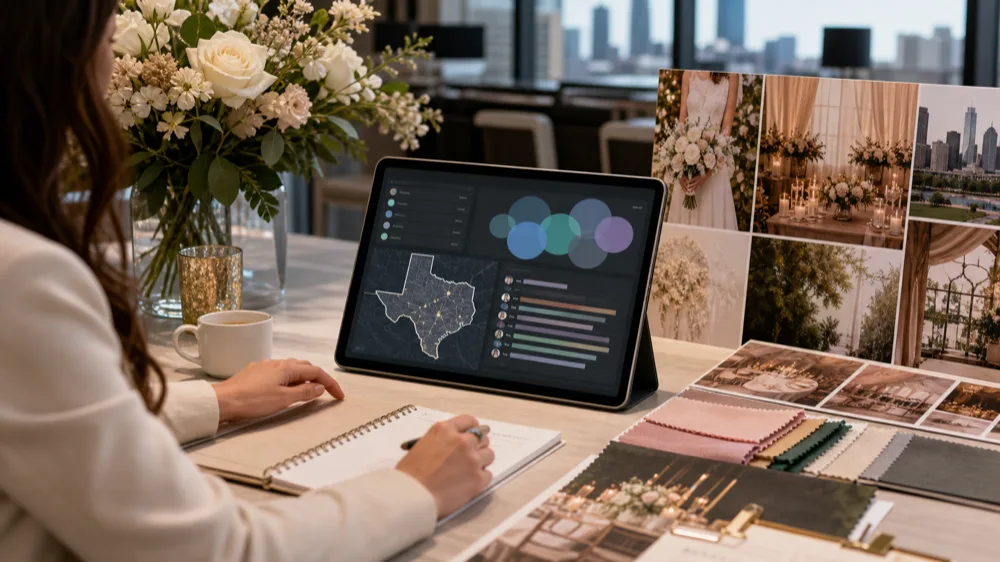
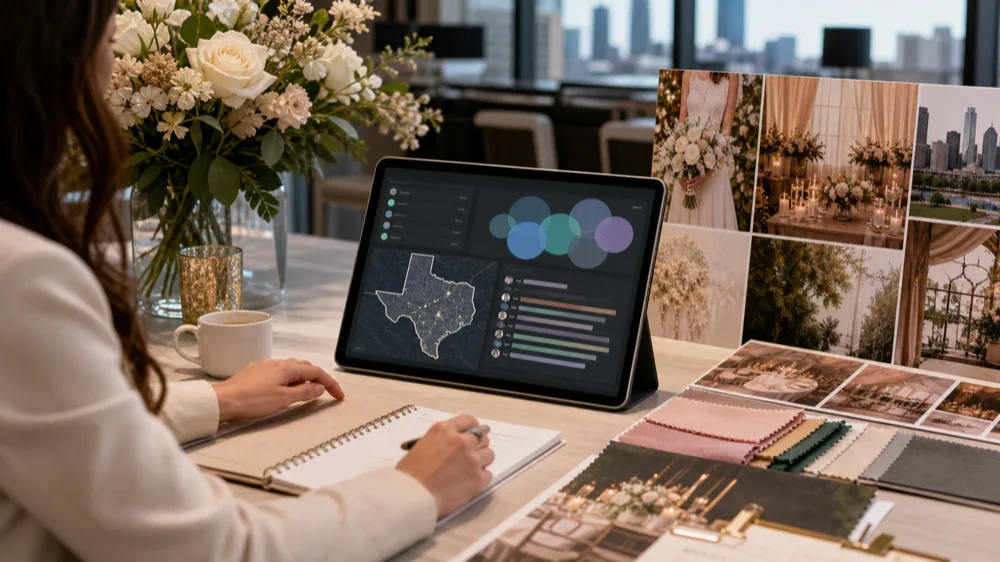
Wedding demand is not one audience
Wedding and event buyers do not move through one clean path. Some begin with a planner. Others begin with decor, photography, venue research, catering, attire, or a broader special-event question.
That matters because each signal points to a different conversation. A person researching wedding websites may need early-stage guidance. A person researching destination wedding planning may need a higher-touch coordination conversation. A person researching event catering may be planning a rehearsal dinner, shower, milestone event, or corporate gathering.
The acquisition system should respect those differences.
 Useful segmentation turns broad wedding interest into more relevant campaign decisions.
Match the offer to the planning moment
The strongest outreach does not treat every buyer as ready for the same consultation. It matches the likely planning stage to a useful offer:
- Early-stage engaged audiences may respond to first-30-days planning guidance.
- Planning and coordination audiences may need checklists, timeline help, and vendor-management clarity.
- Design and decor audiences may respond to lookbooks, palette guidance, and style consultations.
- Destination and premium audiences may need risk-aware planning and calm operational authority.
- Broader event audiences may support adjacent services, venue conversations, and special-event packages.
The signal does not replace the message. It tells the business which message deserves to be written.
Turn local attention into conversations
Audience intelligence is most useful when it becomes a workflow. Start with the service area, choose one audience segment, match it to one clear offer, then use verified contact data and relevant follow-up to begin the conversation earlier.
 Signals become valuable when they are connected to an audience, an offer, and a follow-up path.